
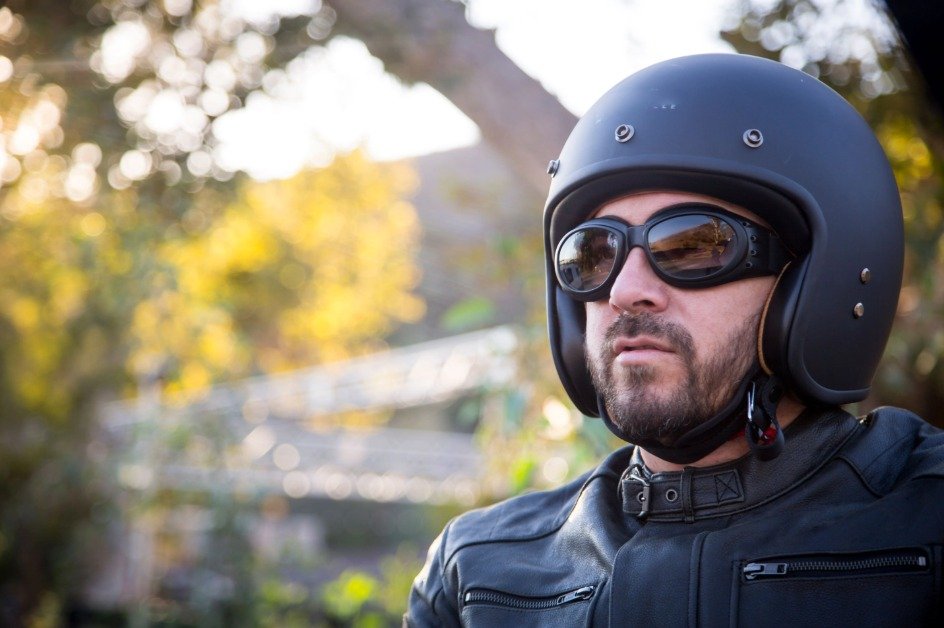
Riding a motorcycle offers a level of freedom and sensory engagement that few other modes of transport can match. However, that same exposure to the elements presents significant challenges for ocular health. One of the most common complaints among riders is the development of dry, irritated eyes after even a short duration on the road. The primary solution to this discomfort lies in the selection of high-quality motorcycle glasses designed specifically to mitigate wind turbulence and environmental debris. Protecting your vision is not just about clarity; it is about maintaining the physical integrity of the eye’s tear film under extreme conditions.
The Physiology of Wind-Induced Dry Eye
To understand why specialized eyewear is necessary, one must understand the tear film. This thin layer of moisture serves as the first line of defence for the cornea, providing lubrication and washing away small particulates. When you ride at highway speeds, the air moving across your face acts as a powerful desiccant. This constant airflow accelerates the evaporation of the aqueous layer of the tear film.
When the tear film breaks down, the cornea becomes exposed to the air. This results in the stinging, burning sensation known as “dry eye syndrome.” For many riders, this is not merely an inconvenience. Chronic dryness can lead to inflammation and, in severe cases, corneal abrasions. Utilizing professional-grade motorcycle glasses creates a pressurized or semi-sealed environment around the eyes, significantly slowing the rate of evaporation and allowing the eyes to remain lubricated throughout the journey.
Essential Features of Motorcycle Glasses for Eye Health
Not all eyewear is created equal when it comes to the demands of the open road. Standard sunglasses often lack the structural design required to block peripheral wind. When choosing gear from RX Safety Canada, several technical features should be prioritized to ensure maximum protection against dryness.
Foam Gaskets and Wind Seals
The most effective way to prevent dry eyes is the inclusion of a foam gasket. These gaskets, often made of closed-cell foam, sit between the frame and the rider’s face. They function as a barrier that prevents wind from swirling behind the lenses. Without this seal, air can “leak” in from the sides or bottom of the frame, which often causes more localized and intense drying than having no glasses at all.
Impact Resistance and Durability
While the primary focus of this discussion is moisture retention, safety remains paramount. High-quality eyewear should meet ANSI Z87.1 standards for high-velocity impact. This ensures that while the glasses are keeping your eyes moist, they are also protecting you from road salt, pebbles, and insects. For a deeper look at the technical standards of protective gear, you can read more about anti-impact and anti-scratch motorcycle safety eyewear to understand how lens coatings and materials contribute to long-term eye health.
The Advantage of Prescription Motorcycle Glasses
For riders who require vision correction, the challenge of dry eyes is often compounded. Many attempt to wear standard corrective frames under a helmet, which rarely provides an adequate wind seal. Others try to wear contact lenses, which are notoriously problematic for motorcyclists. Contact lenses rely on a stable tear film to remain comfortable; the high-wind environment of a motorcycle can cause contacts to dry out, rotate, or even dislodge.
This is where prescription motorcycle glasses become an essential piece of equipment. By integrating the corrective prescription directly into a wrap-around frame with a foam seal, riders achieve both perfect visual acuity and a stabilized micro-climate for their eyes. This eliminates the need for contact lenses and provides a far more stable platform for those with astigmatism or high refractive errors.
Transitioning to Prescription Motorcycle Goggles
In scenarios where wind protection is the absolute priority, such as long-distance touring or riding in arid environments, prescription motorcycle goggles offer the highest level of protection. Unlike standard glasses, goggles typically feature an adjustable strap that ensures a consistent, tight seal against the face.
The increased surface area of the foam padding in goggles distributes pressure more evenly, which is beneficial during multi-hour rides. Furthermore, the internal volume of the goggle allows for better air circulation management through indirect venting. This prevents the lenses from fogging while still blocking the direct “ram-air” effect that causes dryness. For those who ride in extreme conditions, a dedicated goggle system is often the most reliable way to maintain ocular comfort.
Enhancing Visibility with Prescription Motorcycle Riding Glasses
Vision on a motorcycle is dynamic. You are constantly moving between bright sunlight and shaded areas, or perhaps transitioning from day to night riding. Eye strain from squinting in bright light can actually contribute to the sensation of dry eyes, as it reduces the blink rate.
Choosing prescription motorcycle riding glasses with specialized lens tints can help. Photochromic lenses, which darken in response to UV light, are particularly useful for riders who do not want to swap glasses as the sun sets. By reducing the need to squint, you maintain a more natural blink reflex, which helps redistribute the tear film across the surface of the eye.
Protecting Against Environmental Contaminants
Dryness is not caused by wind alone. Dust, pollen, and exhaust fumes are prevalent on the road. These particulates can get trapped in the eye, causing further irritation and inflammation. A well-fitted pair of prescription motorcycle sunglasses acts as a physical shield against these irritants.
At RX Safety Canada, the focus is on providing eyewear that wraps closely around the orbital bone. This “wrap” geometry is critical. Standard flat-front frames leave large gaps at the temples. A high-wrap frame follows the contour of the brow and cheekbones, ensuring that air and debris are diverted around the head rather than into the eyes.
Maintenance and Care for Longevity
To ensure your eyewear continues to prevent dry eyes effectively, regular maintenance is required. Foam gaskets can accumulate sweat and oils over time, which may cause the material to degrade or become less pliable. Periodically cleaning the foam with mild soap and water helps maintain the integrity of the seal.
Lenses should also be treated with care. Using microfiber cloths and appropriate cleaning solutions prevents micro-scratches that can cause glare. Glare leads to eye fatigue, which, as previously noted, can interfere with the eye’s natural lubrication process.
Conclusion
Preventing dry eyes is a matter of proactive equipment selection. The combination of wind-blocking seals, impact-resistant materials, and precise vision correction creates an environment where the eyes can function naturally without the stress of constant evaporation.
If you find yourself reaching for rewetting drops after every ride, it is time to evaluate your current eyewear. Transitioning to a dedicated pair of glasses or goggles designed for the road will not only improve your comfort but also enhance your safety by ensuring that your primary source of information, your vision, is never compromised by irritation. For those who value both performance and health, high-quality motorcycle eyewear is an indispensable part of the rider’s kit.
