
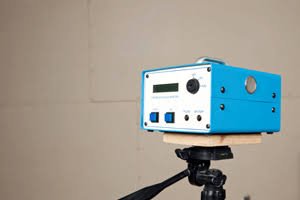
Radon is a colorless, odorless, radioactive gas that naturally emanates from soil and rock. When it seeps into homes and buildings, it can accumulate to dangerous levels — and long-term exposure is linked to increased risk of lung cancer. Because radon can’t be detected by smell or sight, testing is the only way to know if your indoor air is safe.
Indeed, many homeowners are drawn to the convenience and low cost of DIY (do-it-yourself) radon test kits — but are these tests reliable? The short answer: yes — to a point. When used correctly, DIY kits can provide valuable insight, but they have limitations. For critical decisions (especially mitigation actions or real estate transactions), DIY results should often be followed by professional testing. This article explores how DIY radon tests work, what affects their reliability, and when you might (or might not) trust their results.
How DIY Radon Tests Work
Before discussing reliability, it helps to understand how DIY radon tests typically work.
- A DIY radon kit usually includes a small passive detector — often either a charcoal canister or an alpha-track (plastic film) device.
- With short-term kits, you expose the detector in the lowest frequently occupied living area (e.g. ground floor or basement) for a few days — commonly between 2 to 7 days.
- For long-term kits (alpha-track detectors), the exposure period is much longer, typically 90 days or more — sometimes up to a year.
- After the exposure period ends, the kit is sealed and mailed to a laboratory for analysis. The lab measures the decay events (alpha particles) and reports a radon concentration (usually in picocuries per liter, pCi/L).
In essence: DIY radon testing gives you a numerical snapshot (or, for long-term kits, an averaged picture) of radon levels in your home. But whether that snapshot — or average — is accurate and representative depends heavily on many variables.
What Makes DIY Radon Tests “Reliable Enough” — When Done Right
✅ Official Endorsements and General Validity
- According to an overview by the U.S. Environmental Protection Agency (EPA), radon measurement systems — including consumer-available test kits — “provide practical and affordable measurements that can give consumers the information they need” to decide whether to remediate.
- Consumer-grade electronic radon monitors — though newer than passive kits — have been studied under controlled conditions. In one comparative evaluation, many such monitors showed uncertainties between roughly 2% to 15%, and precision ranging from 1% to 24%, even under varying environmental conditions.
- With long-term kits (alpha-track detectors), the results tend to reflect realistic, season-averaged radon levels — a major advantage, since radon concentration fluctuates with time, weather, ventilation, and other environmental factors.
In short: when used properly — placed correctly, left undisturbed, sent to a credible lab — DIY radon testing can yield useful and actionable data about your home’s radon status.
✅ Cost-Effectiveness and Ease
DIY kits are inexpensive — often just a few tens of dollars — and widely available online or through home-improvement stores. This accessibility makes them ideal as an initial screening tool: if radon levels are low, many homeowners may avoid the cost and complexity of professional testing altogether.
Moreover, DIY testing can be done on your own schedule — no need to wait for a professional appointment or leave your home open to contractors. This convenience often motivates people to test sooner rather than later.
Why DIY Radon Tests Can Be Unreliable — and Common Pitfalls
Despite their advantages, DIY radon kits have several important limitations. Here’s a breakdown of what can go wrong — and why a DIY test result should be interpreted with caution.
❗ Fluctuations in Radon Levels Over Time
Radon levels inside a home are not constant. They vary depending on many factors: soil gas entry, home ventilation, weather (temperature, humidity, pressure), outdoor conditions, seasonal changes, and occupant behavior (windows open/closed, heating/air conditioning, etc.).
Because of these fluctuations:
- A short-term test (2–7 days) may catch a temporary spike — giving a “false positive,” where the reading is high but doesn’t reflect the long-term average.
- Or conversely, you might get a “false negative” — a low reading simply because the test coincided with a period of low radon infiltration — even though long-term exposure could still be risky.
This variability is why experts generally consider short-term DIY tests as preliminary “screening” rather than definitive measurements.
❗ User Errors & Environmental Factors
Even a well-designed kit can deliver misleading results if the instructions aren’t followed carefully. Common errors include:
- Incorrect placement (e.g. too close to windows, doors, fans, or outside walls), or placement in a rarely used area such as a crawl space instead of a living area.
- Failing to keep doors/windows closed before and during the test. Ventilation can drastically reduce radon concentration — which would make a test falsely reassuring.
- Environmental factors — humidity, temperature swings, air pressure changes, wind, rain — can influence readings, and DIY kits rarely account for these.
- Problems with the detector itself: lack of calibration, damage, improper storage, or lab errors can all degrade reliability.
Because of these possibilities, many experts caution that DIY tests — especially short-term ones — should not be the only basis for a radon mitigation decision.
❗ Limited Scope — No Interpretation or Mitigation Guidance
A DIY kit gives you a number. It doesn’t tell you where exactly radon is entering, how it fluctuates over time, or what mitigation solutions might be appropriate. If your result is high, you’ll still need a professional inspection to identify entry points (foundation cracks, soil gas infiltration, ventilation issues) and design a mitigation system.
Moreover — without professional context — a borderline reading (e.g. 3.8 pCi/L vs 4.2 pCi/L) can be hard to interpret. Should you act immediately? Wait and re-test? DIY kits don’t help with that.
Short-Term vs Long-Term DIY Tests: Which Is “Good Enough”?
When evaluating DIY kits, one of the most important distinctions is between short-term tests and long-term tests.
Test TypeTypical Duration Pros Cons
Short-Term (2–7 days) 2–7 days Quick results; low cost; good for preliminary screening or a fast check before purchase/sale. High variability; may not reflect long-term average; high chance of false positives or negatives; often not accepted for real-estate or mitigation decisions.
Long-Term (90 days to 1 year) 3+ months More accurate representation of average radon level; less susceptible to fluctuations; better for health-risk assessment. Requires patience; delayed results; some kits require mailing and lab processing.
Bottom line: if you just want a rough idea, a short-term DIY test is fine — but for any serious decision (long-term mitigation, health concerns, selling/buying), a long-term test is strongly recommended.
This consensus is echoed by multiple radon-specialist sources: long-term tests offer “a much more accurate result” than short-term kits.
Consumer-Grade Electronic Monitors vs Passive DIY Kits: A New Approach
In recent years, consumer-grade electronic radon monitors (ERMs) — digital devices that continuously monitor radon — have become more popular. They promise convenience, real-time monitoring, and the possibility to track fluctuations.
- A comparative study of various consumer-grade ERMs found that, in controlled environments, the monitors’ uncertainty ranged from 2–15%, with precision between 1–24%.
- However — and crucially — the same study noted that there is no independent, standardized process to evaluate performance of many of these devices against known radon levels, especially under real-world conditions.
- Environmental conditions (temperature, humidity, air pressure, ventilation) can affect monitor performance just as they affect passive kits. Without careful calibration or oversight, readings can still be skewed.
In short: electronic monitors can be useful — especially as continuous or follow-up detectors — but they should not be treated as infallible. Their readings, too, require cautious interpretation. Some experts see them better suited as screening or supplemental tools, not as sole evidence for major decisions.
When DIY Tests Are Most Useful — And When They Aren’t
✅ Good Situations for DIY Testing
DIY radon tests are especially helpful when:
- You just want a preliminary idea whether your home has a radon problem — especially if you’ve never tested before.
- You want an inexpensive, low-commitment screening before deciding if professional testing or mitigation is worth it.
- You’re conducting occasionally repeated checks (e.g. after a renovation, foundation work, or changes to ventilation) — DIY kits can serve as “checkpoints.”
- For regions or homeowners on tight budgets — long-term passive kits offer a reasonable tradeoff of cost vs. reliability (if handled carefully).
⚠️ Situations Where DIY Tests May Be Inadequate
DIY kits — especially short-term ones — may not suffice when:
- You plan to buy or sell a property, or need documentation for real estate transactions. Many regulatory or underwriting guidelines require professionally conducted and documented tests.
- You’ve already had a high radon reading and need to design a mitigation system. Without professional inspection, you won’t have the detailed assessment required to identify radon entry paths or ensure effective mitigation.
- Your DIY result is borderline (e.g. near the action threshold), or inconsistent over repeated tests. With fluctuating radon, DIY data may mislead you into overreacting or underreacting.
What Experts Recommend — Bridging DIY and Professional Testing
Given the strengths and limitations of DIY kits, many radon experts and organizations recommend a hybrid approach:
- Start with DIY screening — especially a long-term, alpha-track kit — to see if radon levels are a concern.
- If readings are elevated, borderline, or if you need documentation (real estate, mitigation, health reasons), follow up with professional testing by a certified radon measurement expert.
- If mitigation is needed, professionals can not only confirm radon levels but also perform a full home inspection, identify radon entry points, and design/implement a mitigation strategy.
- Periodic re-testing — whether DIY or professional — is a good idea over time, especially if house conditions change (renovations, foundation work, ventilation changes, climate).
This layered strategy balances cost, convenience, and safety: using DIY kits as an entry-level filter, and reserving professional resources for cases that truly warrant it.
Why Some Doubt DIY Tests — And What That Means for You
Despite their popularity, DIY radon tests remain controversial among some professionals and homeowners. Key reasons:
- Lack of standardized oversight or mandatory quality control for many consumer-grade radon devices. As one academic review noted: while there are international standards, there is “no independent process to evaluate the relative performance” of many consumer-grade electronic monitors.
- High variability in readings depending on environmental and user-related factors — meaning that two tests in the same house may give significantly different results, especially short-term tests.
- The passive nature of most DIY kits means they offer only a single reading or average, not a continuous picture of radon fluctuations. Without a professional’s expertise, it’s hard to interpret what that number truly means for long-term health risk.
Because of these limitations, many radon specialists view DIY tests as useful but insufficient for any decision with major health or financial consequences.
Recommendations: How to Use DIY Radon Tests Wisely
If you decide to use a DIY radon test kit — which is fine, but proceed thoughtfully. Here are best practices to maximize reliability:
- Prefer long-term tests whenever possible (90+ days) rather than short-term 2–7 day kits. The longer exposure smooths out fluctuations and better reflects real-life radon exposure.
- Follow instructions to the letter: place the detector in a commonly used lowest living area, at mid-height, away from windows/doors/fans, with windows/doors closed for at least 12+ hours before and during the test.
- Avoid periods of extreme or unusual conditions — don’t test right after foundation work, ventilation changes, storms, or heavy weather.
- Use multiple tests, ideally at different times/seasons (winter vs summer) — or repeat the test if your first result is near a threshold level.
- If a DIY test indicates elevated or borderline radon levels — especially near or above the action thresholds (e.g. 4.0 pCi/L as per EPA guidance) — consider hiring a certified professional to do a follow-up test, diagnosis, and (if needed) mitigation.
- For long-term peace of mind — especially in sensitive contexts (children’s bedrooms, basements, high occupancy), treat a DIY result as preliminary, not final.
The Broader Picture: Radon Testing, Public Health, and Homeowner Awareness
Understanding the reliability — and limits — of DIY radon tests is important not just for individual homeowners, but for public health broadly.
- Many homes worldwide may have never been tested. Accessible DIY kits provide a low-cost entry point that can encourage greater radon awareness and testing coverage.
- However, if DIY tests are misused, misinterpreted, or seen as a substitute for professional evaluation, they can foster a false sense of security — or generate unnecessary alarm.
- Experts recommend periodic reassessment, especially after structural changes (foundation, renovations) or environmental changes (climate, weather patterns).
- For homebuyers or sellers, or for landlords, relying solely on DIY kit results is often not sufficient — documented, professional results are more credible.
Conclusion:
DIY radon tests — whether passive charcoal or alpha-track kits, or consumer-grade electronic monitors — can be reliable tools to detect radon levels in your home, provided they are used, placed, and interpreted correctly. They offer an affordable and accessible first step for homeowners worried about radon exposure.
That said — they are not a guarantee. Short-term kits especially carry a risk of misleading results due to radon fluctuations and environmental influences. Even more sophisticated consumer monitors suffer limitations, lack of universal quality control, and environmental sensitivity.
Therefore: treat DIY tests as a screening tool — not a final diagnosis. If results are elevated, or if you require a definitive measurement (for mitigation, real estate, health concerns), follow up with a professional.
In the end, protecting your home from radon — and by extension, your family’s health — means being informed, cautious, and using the right tool for the job. DIY radon test kits can be part of that strategy — but they should rarely be the whole story.
